3 August 2026
Hello again appreciator of science,
Ahoj znova, milovník vedy,
[Over 300 million people speak a slavic language]
BIOLOGY / ETHOLOGY
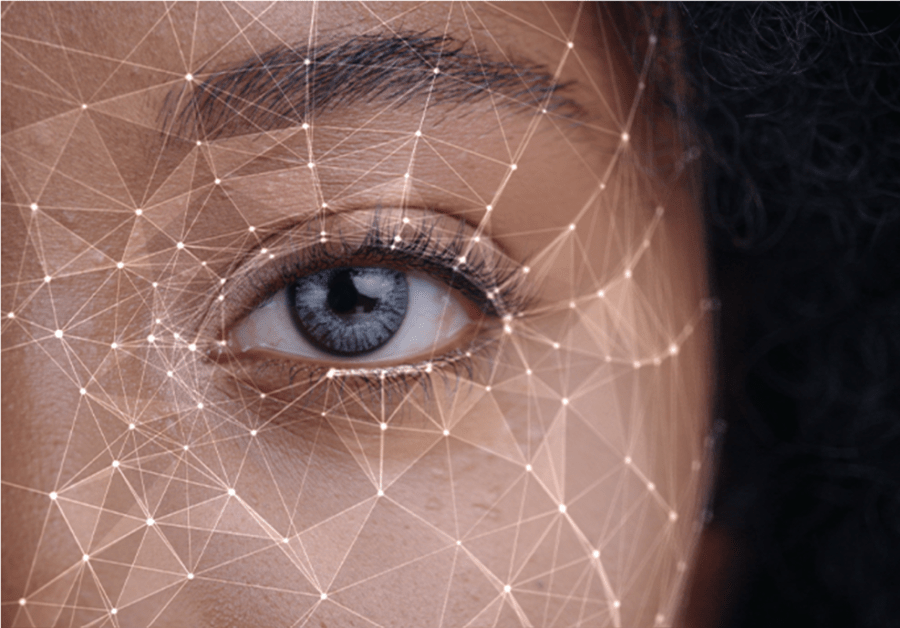
Let me share what i recently learned about some extremes of human perception. One to two percent of people are ‘super-recognizers’. They easily recognize people years after a brief encounter. [Definitely NOT me.] People with prosopagnosia have difficulty recognizing anyone; even their spouse or their own reflection in a mirror. Also there are people with aphantasia – they cannot bring to mind the appearance of anything. They simply cannot create a ‘mental picture’ of a person, a top hat, a fire extinguisher, a camel, anything.
Imagine what life for these two extremes of people might be. Some – if not most – birds are super-recognizers. Penguins distinguish which of hundreds of chicks is their own. The International Bird Rescue Center was rehabilitating an injured Brown Pelican who aggressively threatened the executive Director regardless of what she wore, but regarded everyone else with calmness.
What most of us do countless times a day we simply take for granted, but we are constantly relying on a brain that has been honed by evolution for nearly a billion years. Brains are incredibly complex – likely the most complex organ in this sector of our Galaxy. Use it joyfully and use it wisely.
Relevant video: Your Brain Makes Up Reality – NOVA PBS
SPACE
Venus is delightfully bright these nights – even in the light-polluted skies where most of us live. It has been adorning our colorful sunsets. [Venus will slowly become less spectacular toward the end of the month.] Step outside at twilight and enjoy.
The moon will get smacked by a 14 meter-long section of a SpaceX rocket Tuesday night at 23:35 [11:35pm] Pacific Time moving 8,800 km/hr [5,500 mph]. It is the second stage of a rocket that propelled two lunar landers in January 2025. It won’t be visible, however, except with a strong telescope.
RAFFLE

This cap is one of dozens of science-themed caps that the winner will choose from for this SciSchmooze Raffle prize. Just send an email before noon Friday to david<dot>almandsmith@gmail<dot>com with your guess of an integer from 1 to 1,000. In our previous Raffle, the eOracle offered up 199. Of the 19 entrants, Taylor was closest with her guess of 222, winning a 450ml borosilicate coffee beaker/mug.
A “Thank You” goes out to our many readers who submitted comments on the OMB’s proposed rule that would give political appointees total discretion over federal funding of scientific research. Nationally, over 300,000 comments were submitted.
CLIMATE

¿Gradually evacuate New Orleans? That is the recommendation of a scientific paper published in Nature. This idea was widely circulated after Hurricane Katrina 21 years ago that resulted in over 1,300 drownings and $200 billion in damages. Most of New Orleans is already below sea level, it continues to sink, and our oceans continue to rise.
¿Is the world threatened by a ‘suicidal’ model of capitalism? “Yes,” says Colombia’s president Gustavo Petro. At April’s Climate Summit in Colombia – the world’s first international conference on transitioning away from fossil fuels – he identified the fossil fuel industry as a cause of global problems.
Our federal government is required to issue a “National Climate Assessment” every 4 years. The Internet portal to all five previous assessments has been shut down. A climate science denier, Matthew Wielicki, has been selected to oversee production of the sixth National Climate Assessment.
ENVIRONMENT

Most of the heat gained by our Earth since the Industrial Revolution resides not in the atmosphere, but in the oceans. The oceans have many circulatory systems going in many directions with considerable differences in temperature and depth. Those systems intimately affect the weather. ¿How best do we study ocean circulations and their temperatures? Answer: with expensive expeditions using ships and undersea scientific submersibles – or with sharks. Researchers capture sharks that naturally move between the surface and the depths, attach electronic modules to their fins, and let them free. When a shark breaks the surface, the module transmits recorded information on depth, temperature, and location to satellites. Cool!
While at the National Center for Science Education, i worked alongside Peter Hess. Since then, one of his sons [with others] developed a smartphone app that tracks fires and floods called “Watch Duty”. Their app just got coverage in the New York Times. Kudos!
Bad Idea of the Week Department: Hey, wouldn’t it be great to have giant mirrors orbiting Earth to reflect sunlight to construction sites at night – or power solar farms at night – or light up agricultural harvesting in the cool of the night? On the negative side: interfering with astronomy (including burning the eyes of astronomers), affecting diurnal rhythms of plants and animals (& humans?), raising the probability of the Kessler Syndrome, diminishing the beauty of the night sky, and likely more ill sequelae. The federal administration has given the go-ahead to test this idea.
GOOD NERDY VIDEOS
The New Madrid Earthquakes – 250 to 250 – Conevery Bolton Valencius – 1 min
7.5 in Missouri !!
Going Extinct – ImprovBroadway – 1.5 mins
Enjoy a laugh!
Climate Denial Goes Global – Katherine Hayhoe – 3.5 mins
Ouch!
¿A Dark Matter Candidate? – NOVA PBS – Elba Alonso-Monsalve – 5 mins
Heaviosity
Everywhere Is Warming Faster Than the Rest of the World – Sabine Hassenfelder – 6 mins
¿Huh?
Primate Portal at Carnegie Mellon – 7 mins
¿Are you as smart as a 5-year-old baboon?
Snowball Earth Evidence in Colorado – Geo Girl – Rachel Phillips – 9 mins
Evidence from 700 MYA ?
Shingles Vaccines Protect Against Dementia – SciShow – Deboki Chacravarti – 10.5 mins
Get yours now!
Current Climate Analyses – Just Have a Think – David Borlace – 11 mins
Empirical evidence & climate modeling – Oh My!
Your Brain Makes Up Reality – NOVA PBS – 13 mins
NOVA specialists made this up
Artemis Sexism?; Little Red Dots – Dr. Becky – Becky Smethurst – 15 mins
¿Testosterone in a can?
Renewable Energy Transition – PBS Horizons – William Brangham – 21 mins
A good discussion
Aluminum – Tales from the Periodic Table – Ron Hipschman – 35 mins
The Full Story of Dinosaurs in 4 Chapters – Big Think – Steve Brusatte
- The Rise and Fall of Dinosaurs – 19 mins
- T. Rex: The King of Dinosaurs – 13 mins (from 19:16)
- The Rise and Reign of Mammals – 37 mins (from 32:02)
- How Birds Became the Last Dinosaurs – 31 mins (from 1:09:21)
Empathy requires highly sophisticated brain functions in multiple regions. [Anterior Insula, Anterior Cingulate Cortex, Amygdala, and the Mirror Neuron System] Not everyone is capable of feeling empathy toward others, but most humans and many other mammals are indeed capable. Humans, however, also have the ability to limit empathy towards other people on the basis of religion, political attitudes, nationality, sexuality, etc.
Enjoy your life this week … and practice including yet more in your bubble of empathy,
Dave Almandsmith, Bay Area Skeptics
“We don’t see things as they are, we see them as we are.”
— Anaïs Nin (1903 – 1977) French-born American writer